Basement Flooding Cleanup in Ballwin, MO
Most Ballwin water ends up in the basement: the rec room, the laundry and the storage side. The restoration team pumps it out, opens what is wet and dries the walls and slab to the IICRC S500 standard.
(888) 603-7319Pump out the Ballwin basement now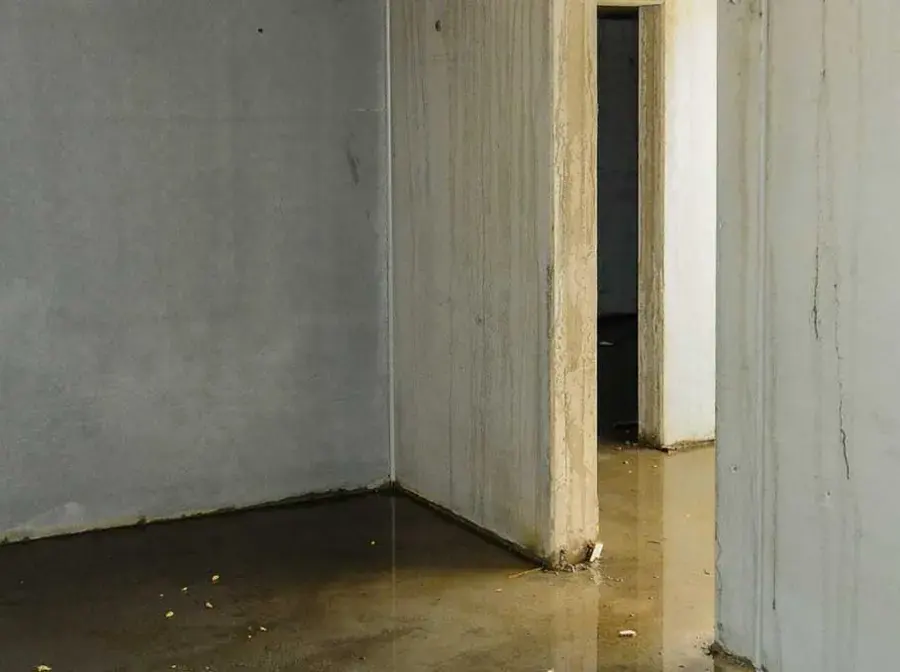
Ballwin grew up in the 1960s, 1970s and 1980s, and most of those houses sit on full basements. Many were finished decades later with carpet, stud walls and drywall laid right against the concrete. When water gets in, it soaks the pad first, then wicks up the drywall and into the bottom plate where nobody can see it.
How water gets into a Ballwin basement
- Long rains saturate the clay soil and push water through the cove joint where the wall meets the floor
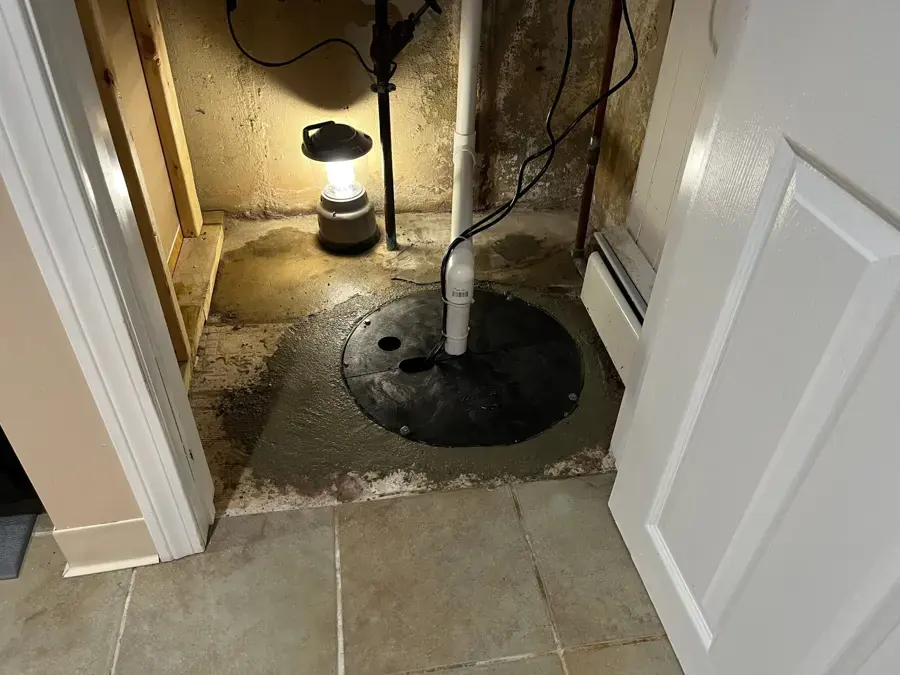
- A sump pump fails or falls behind, usually during a storm that also cuts the power
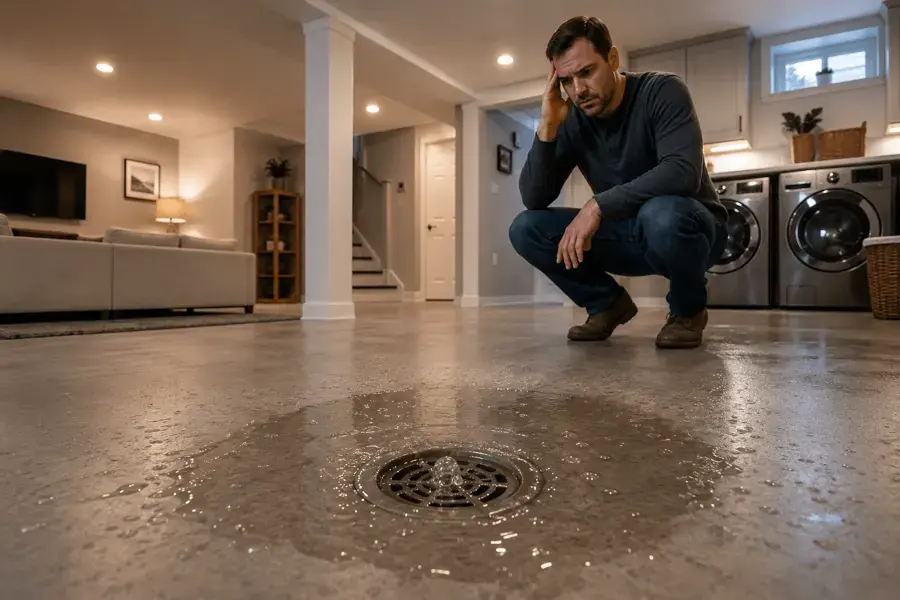
- The floor drain backs up when the sanitary sewers surcharge in a heavy storm
- Window wells fill and pour through the basement window
- A water heater, washer hose or supply line lets go on the unfinished side
The source decides the category of water, and the category decides what can be dried and what has to go. That is why the tech who does the walkthrough asks where the water came from before any equipment comes off the truck. If it came up through the drain, see floor drain backup cleanup.
What the cleanup looks like
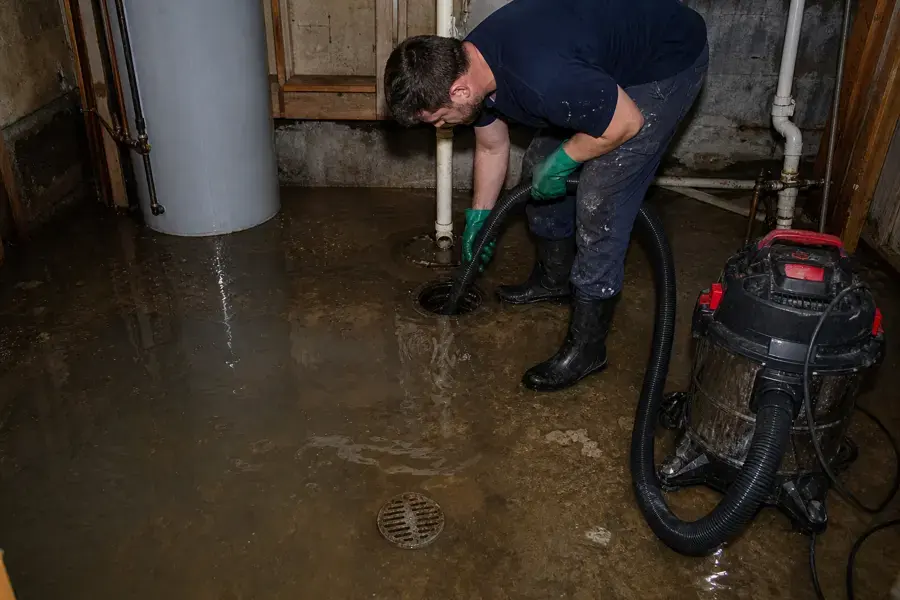
The extraction crew pumps the standing water and pulls what it can from the carpet. Pad comes out. The tech maps the walls with a pinless meter and thermal imaging to find how high the water wicked, and the drywall is flood cut a little above the highest wet reading. Wet insulation comes out with it. Air movers and LGR dehumidifiers go in, sized to the room, and the drying team records readings every day on the slab, the bottom plates and the studs.
Trade fact: a concrete slab holds water long after the carpet feels dry. Most crews treat the basement as dry only when the slab and the wall bottoms read within 2 to 4 points of a dry reference, not when the room looks dry.
After the basement is dry
Once the readings reach the goal, rebuild is a separate phase: new drywall, paint and flooring. The cause gets fixed too, whether that is a new sump pump, a backwater valve, a regraded yard or gutters that carry water away from the foundation. The National Weather Service St. Louis office posts flash flood watches for St. Louis County, and the Missouri Department of Commerce and Insurance explains how flood and water backup coverage work in Missouri.
What does basement flooding cleanup cost in Ballwin, MO?
In Ballwin, MO, basement flooding cleanup typically runs $2,000 to $12,000. A few inches across an unfinished slab sits at the low end; a finished basement with carpet, drywall and a floor drain backup costs the most.
| Type of loss | Typical range | What usually drives it |
|---|---|---|
| Unfinished basement | $2,000 to $4,000 | Extraction from the slab, air movers and dehumidifiers, daily readings |
| Finished basement | $4,000 to $12,000 | Pad removed, flood cuts along the walls, framing and slab dried |
| Contaminated water | $10,000 to $22,000+ | Category 3 protocol, porous materials removed, antimicrobial applied |
These are typical ranges, not a quote. The drivers are the water category, the square footage, the material class and how fast drying started. For a closer planning number, try the water damage cost calculator.
How basement flooding cleanup is handled in Ballwin, MO
Pump out
Standing water comes out with a truck-mounted unit or submersible pumps.
Map the walls
Meters and thermal imaging show how high the water wicked.
Remove and flood cut
Pad, wet insulation and drywall above the wet line come out.
Dry to the goal
LGR dehumidifiers and air movers run until the slab and walls read dry.
Basement Flooding Cleanup questions in Ballwin, MO
Water still spreading? The drying team sizes extraction and drying to the level, the source and how long the water has been there.
Ask about Ballwin basement flooding cleanupCan the carpet in my basement be saved?
Often, if the water was clean and extraction starts quickly. The pad underneath almost always comes out. Carpet touched by drain or sewage water is removed.
Why did water come through the floor where the wall meets it?
That seam is the cove joint. After long rains, water in the clay soil builds pressure against the foundation and finds that joint first.
How long does a flooded basement take to dry?
Three to five days is typical for a basement caught early. A thick slab, block walls or water that sat for days can add time.
Is basement flooding covered by insurance in Missouri?
It depends on the source. A burst pipe is often treated differently from seepage, sump overflow or a drain backup, which may need a water backup endorsement or a flood policy. Coverage depends on your policy, so it is worth checking with your own insurer.
Does all the drywall have to come out?
No. The drying team cuts only above the highest wet reading, usually a band of two to four feet along the bottom of the wall.
What stops it from happening again?
It depends on the cause: a backup sump pump, a backwater valve, extended downspouts, a regraded yard or a waterproofing contractor for recurring seepage.
Related water damage services in Ballwin
Basement flooding cleanup across Ballwin, MO
The Ballwin restoration crew handles basement flooding cleanup in Old Ballwin, Seven Trails, the Clayton Road, Kehrs Mill Road and Manchester Road corridors and the Kiefer Creek side, ZIP codes 63011, 63021, 63022 and 63024, with Manchester, Ellisville, Winchester, Twin Oaks, Clarkson Valley, Chesterfield, Wildwood, Town and Country, Des Peres and Valley Park close by.
Water damage in Ballwin right now?
The restoration team extracts standing water, dries the structure to the IICRC S500 standard and documents every step for your insurance claim.